
ACTPAC Project in the AIChE Annual Meeting 2025 in Boston
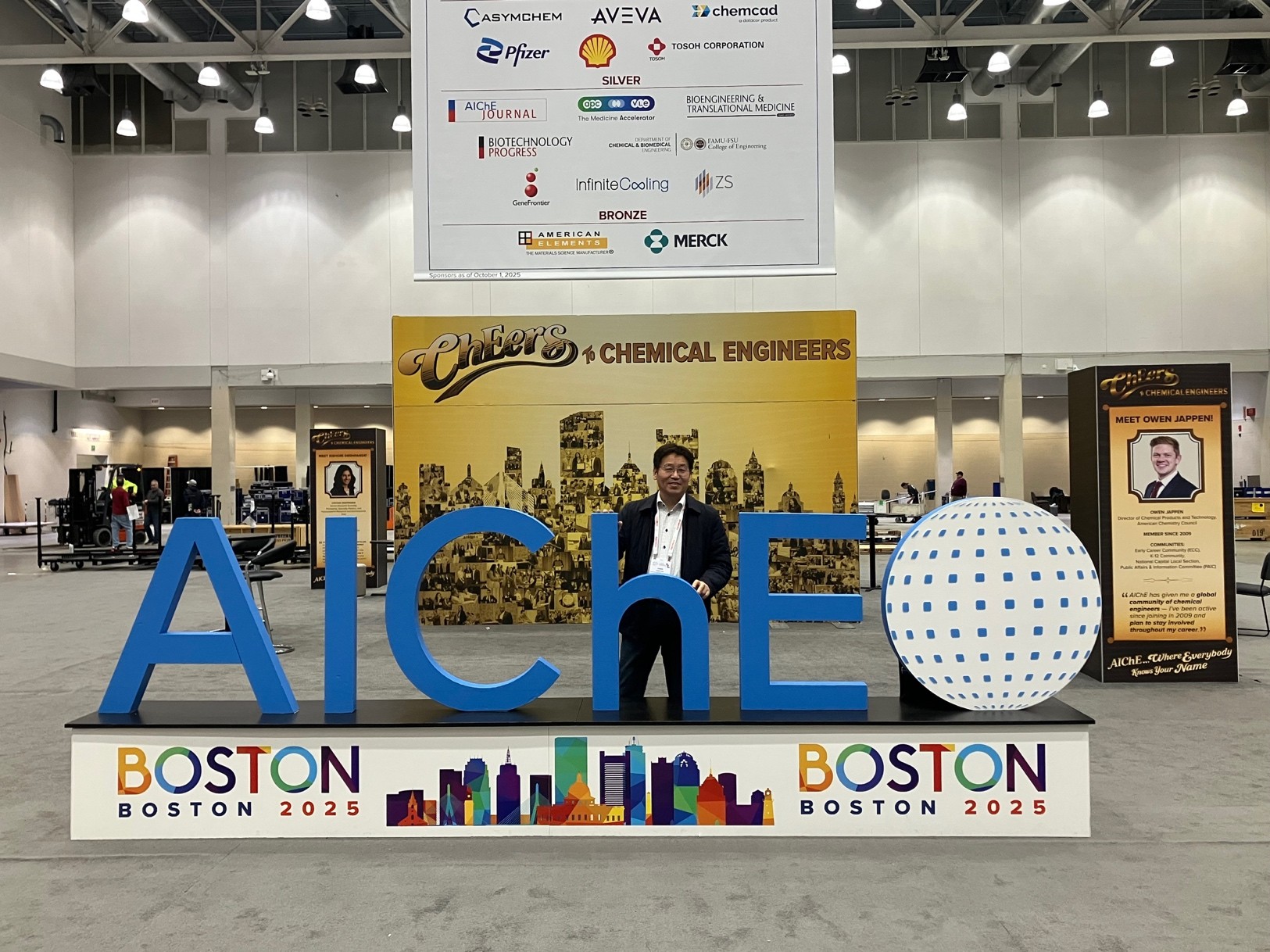
The American Institute of Chemical Engineers (AIChE) is a professional organisation for chemical engineers with over 60,000 members from more than 110 countries. Its annual meeting is a major global event in the field. In 2025, it took place in Boston from 1–6 November, with the theme being ‘Chemical Engineering Reimagined’. Sessions covered topics such as advanced materials, sustainability, digital transformation, and career development, focusing on innovation, emerging challenges, and new opportunities in the field. The event was attended by more than 6,000 people.
In total, the conference featured more than 700 sessions distributed across three venues. Within the broader program, plastic waste was the focus of several key sessions. In addition to a dedicated plenary session and a poster session on waste plastics, six specialized academic sessions were held: (1) Conversion of Waste Plastic into Liquid Fuels, (2) Analysis and Assessment for Solving the Plastic Waste Crisis, (3) Waste Feedstocks to Fuels and Petrochemicals I & II, (4) Recycling and Upcycling of Plastic Waste, and (5) Microplastics: Pollution and Treatment. These sessions collectively featured 60 presentations, reflecting the growing academic and industrial interest in advanced plastic waste management strategies.
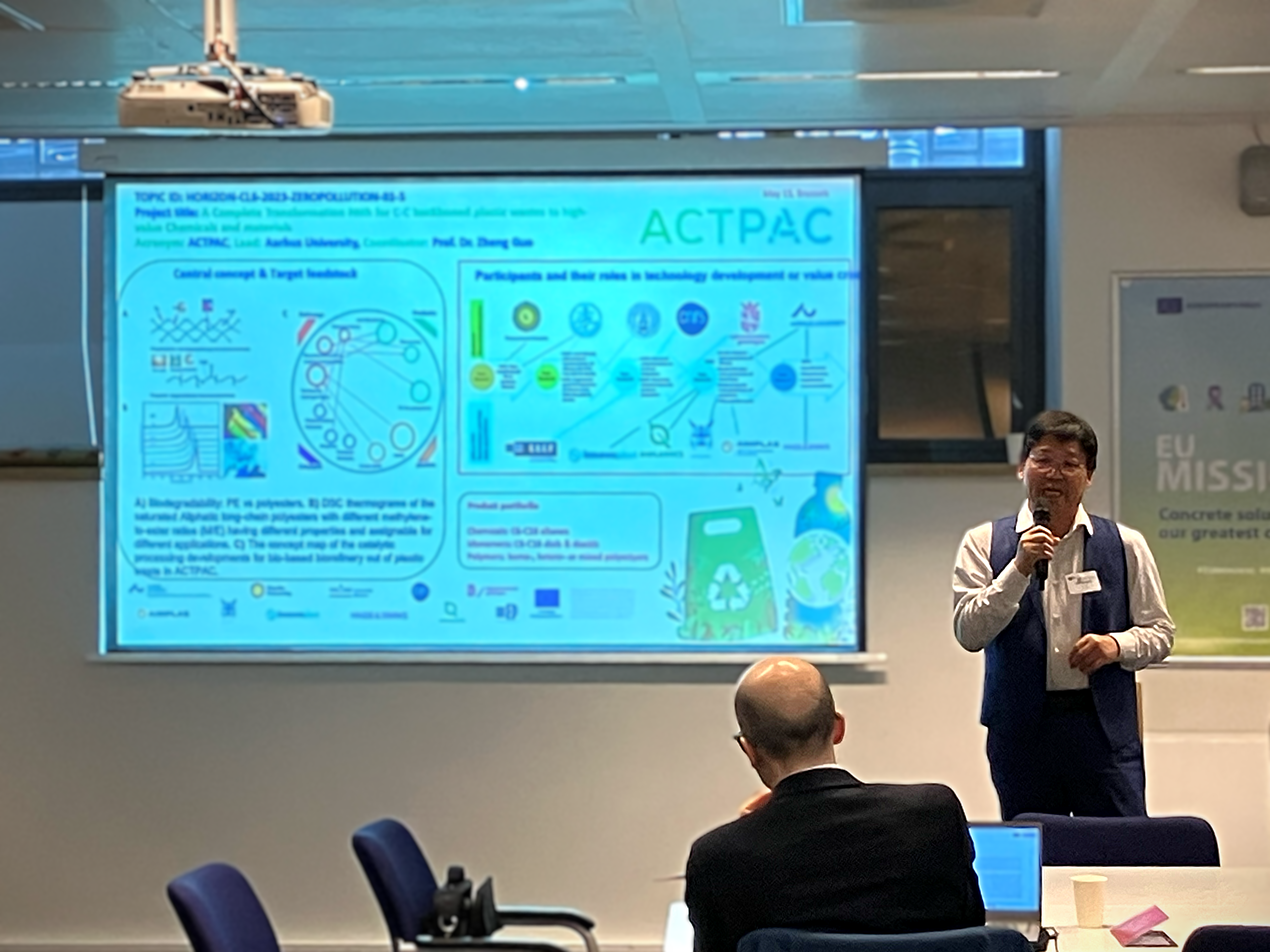
On behalf of the ACTPAC consortium, Prof. Dr. Zheng Guo gave a talk on “Industrial Perspective of New Value Chains from C-C Backboned Plastic Wastes”.
The speakers on plastic waste topics were mainly from U.S. institutions (e.g., MIT, Pennsylvania State University, and NYU), European countries (e.g., Denmark, Italy, and Germany), and Asian countries such as South Korea. By attending presentations, inspecting posters, and reviewing abstracts, the state-of-the-art in plastic waste technology development was found to be concentrated in several key areas:
- Developing and optimizing catalytic systems to use plastic waste as a carbon resource for producing fuels and chemicals;
- Modeling plastic waste recycling via refinery-compatible poly-crude through techno-economic and life cycle analyses, aiming to reintegrate plastic waste into existing refinery infrastructure for cost and emissions savings;
- Biological upcycling of plastic waste combined with chemical depolymerization, using the resulting oils as feedstock for microbial conversion into valuable chemicals;
- Developing strategic approaches to manage field plastic films and municipal mixed plastic waste through two-stage decision-making: facility siting and post-processing distribution;
- Although no longer mainstream, research into enzymatic PET degradation is still ongoing, with efforts focused on identifying effective enzyme systems.
Dr. Guo’s presentation mainly focused on the overall concept, technical development, and potential impact of the EU-funded ACTPAC project. His talk was structured into six sections focusing on new technologies that go beyond the state-of-the-art, ACTPAC’s zero-pollution, bio-based solution to current environmental challenges, and the creation of new value chains from plastic waste.
The talk attracted significant attention, prompting questions such as: Why are different bioconversion systems being developed instead of existing polyhydroxyalkanoate-based systems? How are different value-added products created?
There were standout presentations, including one from MIT’s Bradley Olsen Lab on a high-throughput, pan-genomic approach to multi-species polymer biodegradation. In this work, they developed a high-throughput test allowing hundreds of polymers to be screened within 2–3 weeks. A modified protocol tested 14 commercial polymers with 18 bacterial and fungal species, generating over 250 biodegradation results. Trends were identified in both polymer structure and associated degrading organisms. Representative microbial consortia were also developed to explore interactions between species and polymer types.
Overall, the AIChE talks were presented from an engineering perspective, aiming to solve the plastic waste challenge. The reports focused on strategic planning, process and reactor optimization, and practical solutions, rather than on detailed lab protocols or specific case studies.
On one hand, this reflects the fact that managing and utilizing plastic waste is complex and practically challenging.
On the other hand, neither chemical technology nor biological methods are yet fully equipped to tackle the issue alone.
Plastic waste handling remains in its early stages, and further innovation is needed. The ACTPAC project is well-positioned at this stage of technological development.
Author: Zheng Guo
Links
Keywords
ACTPAC, AIChE Annual Meeting 2025, plastic waste, chemical engineering, recycling technologies, plastic upcycling, bioconversion, catalytic systems, microplastics, sustainability, waste plastics, circular economy Biotechnology,