KnowledgeTransition stage of ACTPAC: Moving forward from Lab to Pilot

Transition stage of ACTPAC: Moving forward from Lab to Pilot
The ACTPAC project has now entered its third year, marking a critical phase in its development. Building on strong progress achieved during the first 24 months, the project is now transitioning from laboratory-scale research to pilot-scale implementation, aiming to validate innovative technologies for the upcycling of plastic waste under real-world conditions.

The project enters its third year: a critical stage for ACTPAC

Since its start on 1 January 2024, ACTPAC has now entered its third year. Substantial progress has been achieved across five academic partners, namely UU, AU, UM, CNRS, and UG, and all five key technological milestones have been successfully reached.

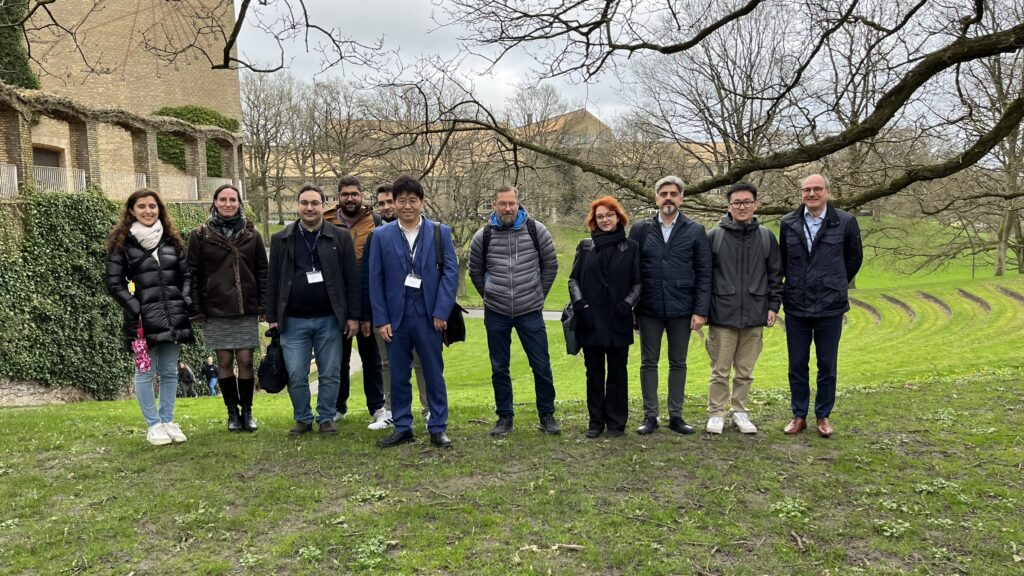
Figure 1. Representatives of the ACTPAC consortium met on the campus of Aarhus University in 2024.

What key outcomes has ACTPAC achieved so far?

During the first 24 months of the project, the consortium has delivered a series of important results towards a new bio-based processing pathway for the upcycling of PE waste. These developments offer potential advantages in terms of technological innovation, value creation, and environmental and economic sustainability compared to established processes.

Key achievements beyond the current state of the art include:

  1. Proof-of-concept hydrocracking catalysts for the conversion of PE into liquid alkanes
  2. First-generation enzyme systems enabling the transformation of short- to medium-chain alkanes into diols and diacids
  3. Microbial alkane conversion systems for transforming medium- to long-chain alkanes into diols and diacids
  4. Proof-of-concept polymerization systems (chemical and enzymatic)
  5. A portfolio of PE-derived high-value chemicals and materials, including alkanes, monomers, and biodegradable polyesters

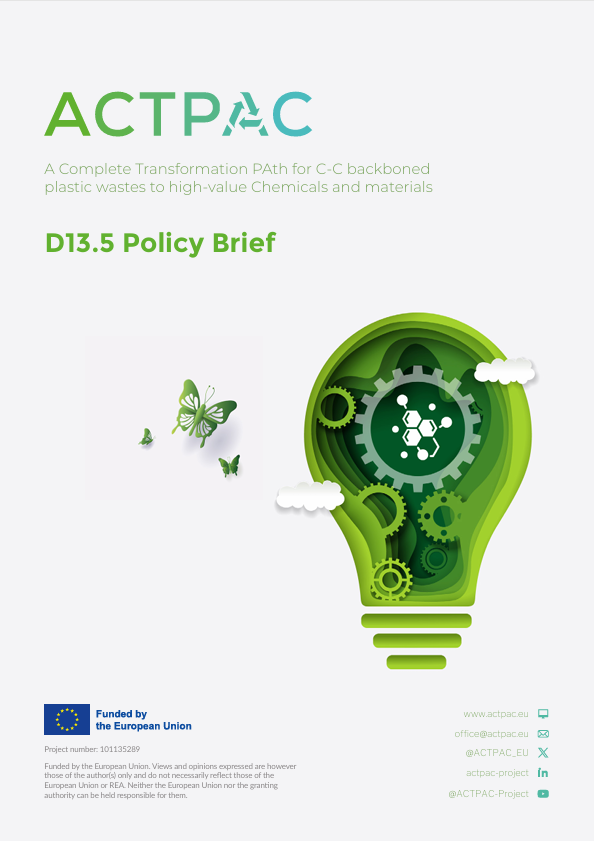
Accordingly, the first policy brief report has been released to communicate ACTPAC’s outcomes to stakeholders and target groups.

Figure 2. Deliverable 13.5: Policy Briefing Report

Engineering upscaling: more than linear scaling

The third project year is a critical stage for translating lab-scale recipes into pilot-scale equipment, ensuring that the process remains robust and efficient.

Engineering upscaling is not a linear process of simply multiplying dimensions or quantities by a factor. Instead, it is a complex and often non-linear transition from a small-scale, highly controlled environment (pilot plant or laboratory) to a large-scale, heterogeneous industrial setting.

Within the ACTPAC consortium, pairs of technology R&D generators (universities) and technology validators (SMEs) have already been established at the time of consortium formation. To implement this transition, individual meetings within each pair have been initiated. The discussion involves materials, technology, and knowledge transfer.

Through pilot-scale tests, the following questions and outcomes can be addressed:

  1. Engineering and safety validation (devices, hazard, and operability);
  2. Process optimization (adaptability of equipment to material variability and unexpected reactions during upscaling);
  3. Technical parameterization (heat transfer, homogenization, and reactor performance).

Through this upscaling process, many technical questions can be answered. A successful transition will enable a move beyond mere “scientific validation” to “proven performance”.

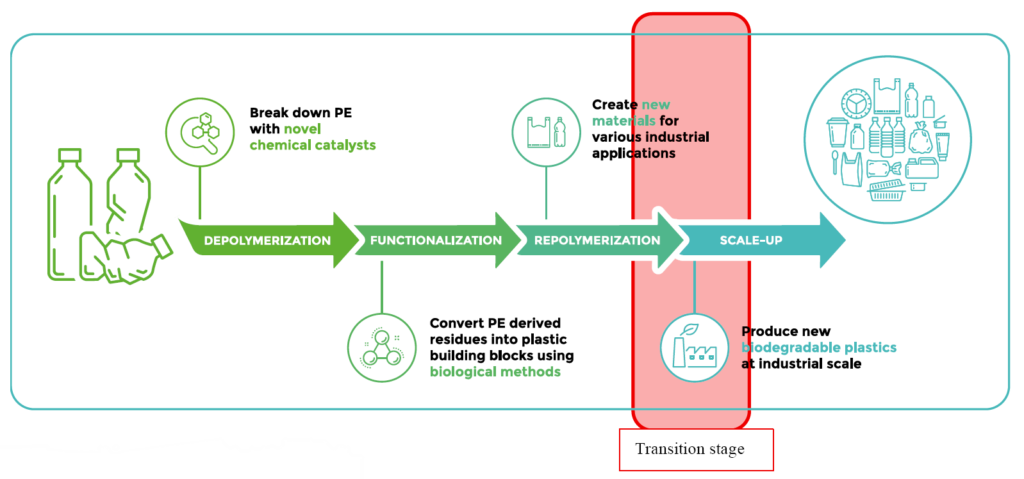
Transition stage of ACTPAC
Figure 3. ACTPAC process overview highlighting the transition stage.

Author: Zheng Guo 

Keywords

ACTPAC; plastic waste upcycling; pilot scale; technology scale-up; bio-based processes; polyethylene (PE); enzymatic conversion; hydrocracking; industrial biotechnology; circular economy; Horizon Europe; process engineering; sustainable materials; TRL advancement; innovation in plastics