
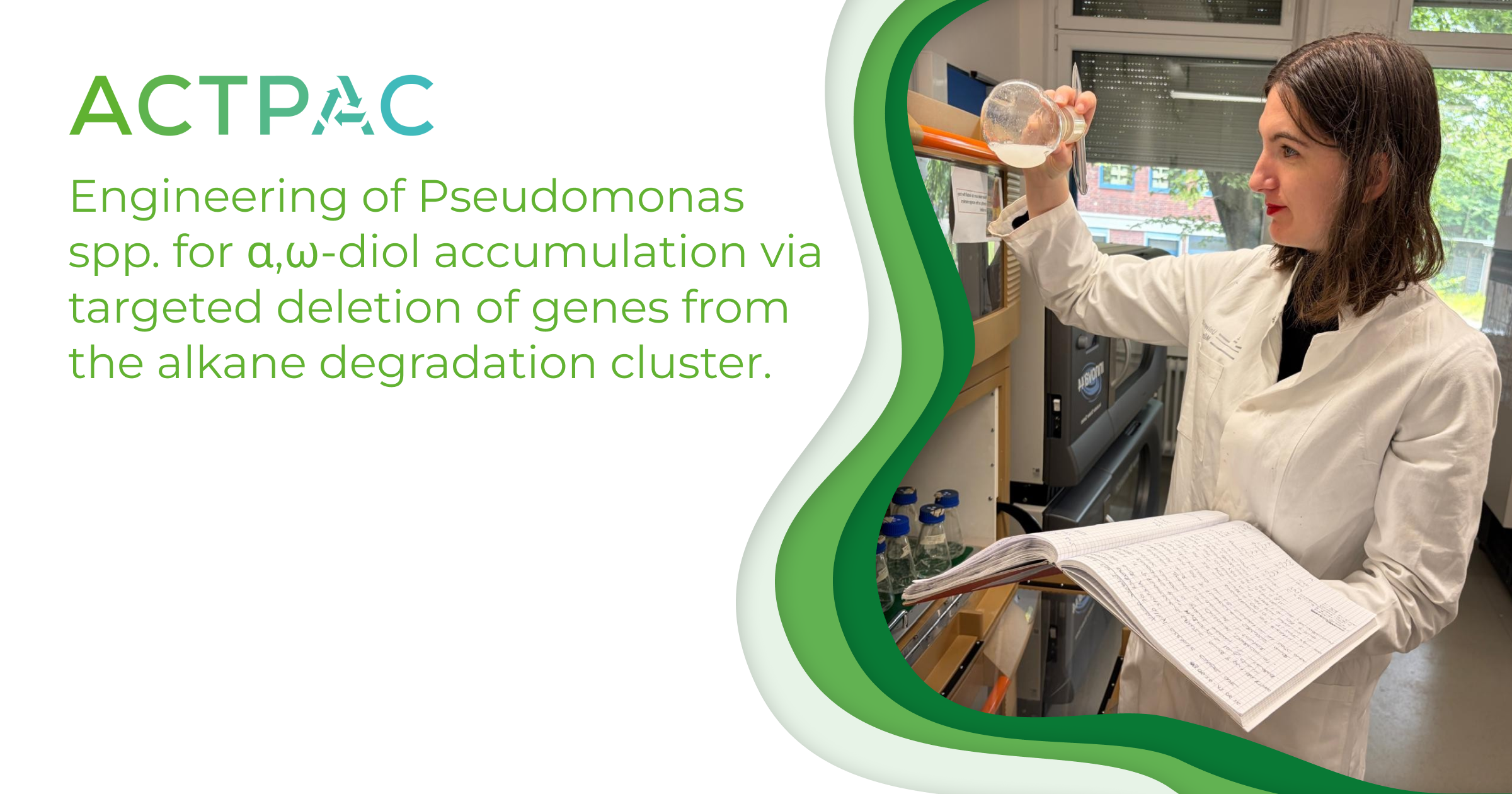
Engineering of Pseudomonas spp. for α,ω-diol accumulation via targeted deletion of genes from the alkane degradation cluster
For sustainable α,ω-alkane diol production using whole cells as biocatalysts, we must go from zero to hero, since no known microorganism naturally accumulates these compounds. Let’s have a look at how we intend to achieve this in the ACTPAC project!
In the ACTPAC project, we aim to produce biodegradable plastics (BPs). These polymers are often regarded as a promising approach to address the highly problematic accumulation of persistent, non-degradable plastics in natural ecosystems. Among BPs, polyesters are particularly relevant due to their hydrolysable ester bonds. Their production relies on polycondensation of α,ω-alkanedioic acids and α,ω-alkane diols [1].
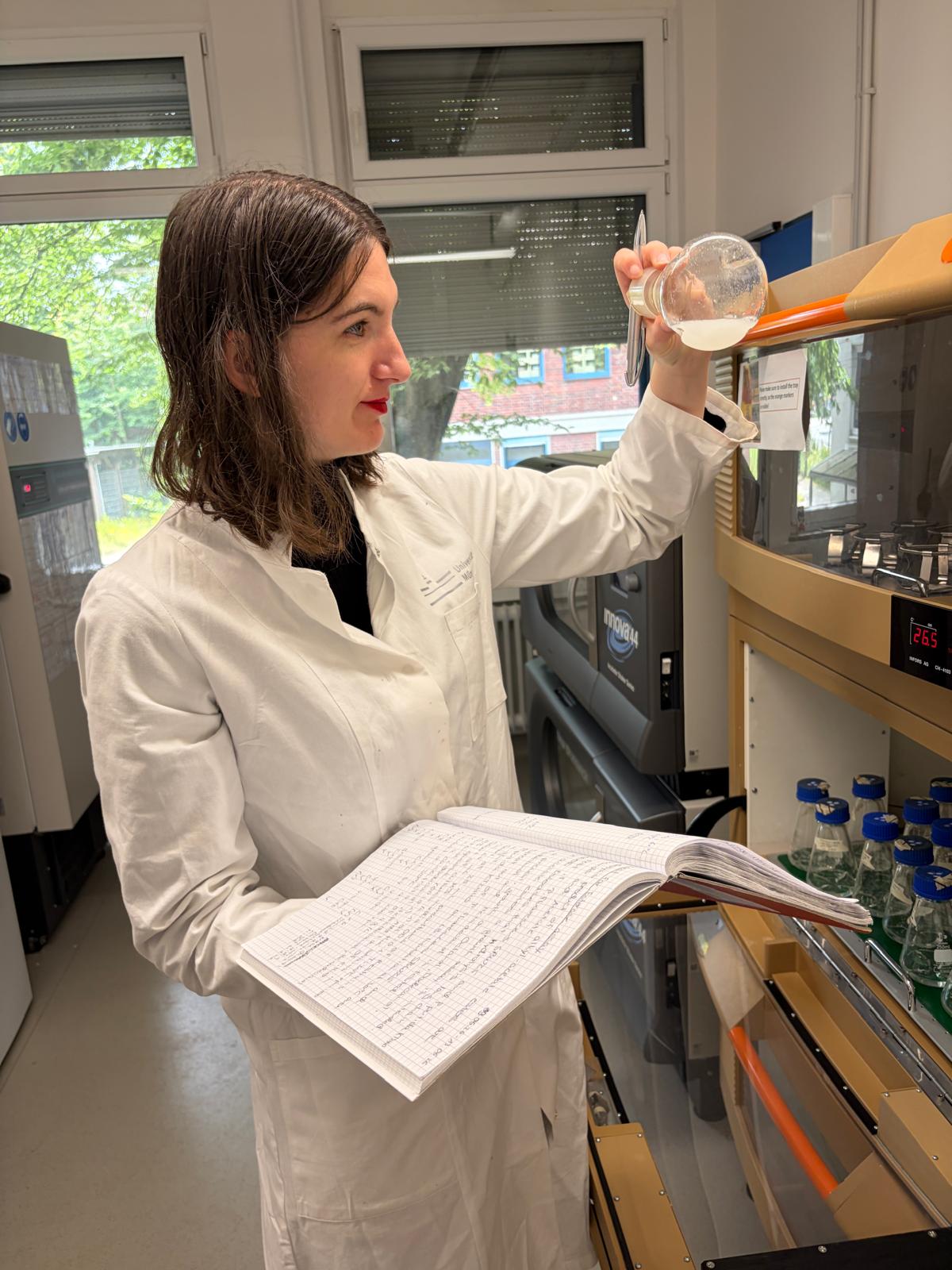
At the University of Münster, our aim regarding the production of α,ω-alkane diols is to establish a microbial chassis for their sustainable production under mild conditions. This would provide an environmentally friendly alternative to conventional, energy-intensive chemical synthesis routes. To achieve this, we are engineering the metabolism of Pseudomonas putida KT2440 and Pseudomonas fluorescens SBW25. As a first step, alcohol dehydrogenases and fatty acid CoA ligases involved in the degradation of α,ω-alkane diols and their metabolic precursors are knocked out in both host strains. These modifications shall prevent the utilisation of the target products for energy generation and thereby enable their intracellular accumulation.
Growth experiments using alkanols and fatty acids as the sole carbon source confirmed the desired knockout phenotypes, as mutant strains were no longer able to grow on octane, octanoic acid, dodecanol and dodecanoic acid. Following the establishment of all required deletions, terminal monooxygenases, namely AlkB and CYP153, were introduced to confer the catalytic capability to convert alkanes into α,ω-alkane diols. Overall, this work lays the foundation for a biotechnological platform enabling the sustainable microbial production of polyester monomers and contributes to the development of environmentally compatible plastic materials.
Author: Ann-Sophie Jochmann
References
[1] Díaz, A., Katsarava, R. & Puiggalí, J. (2014). Synthesis, properties and applications of biodegradable polymers derived from diols and dicarboxylic acids: from polyesters to poly(ester amide)s. International journal of molecular sciences, 15, pp.7064–7123; Available at: https://doi.org/10.3390/ijms15057064
Keywords
ACTPAC, microbial polyester monomer production, biodegradable plastics, α,ω-alkane diols, biocatalysis, metabolic engineering, Pseudomonas putida, Pseudomonas fluorescens, sustainable biotechnology, alkane conversion, polyester synthesis, microbial cell factories, enzyme engineering, AlkB, CYP153, plastic waste upcycling, circular economy