NewsACTPAC in Bordeaux and the Symposium on “New trends in polymer science”
ACTPAC Bordeaux polymer science symposium

ACTPAC in Bordeaux and the Symposium on “New trends in polymer science”
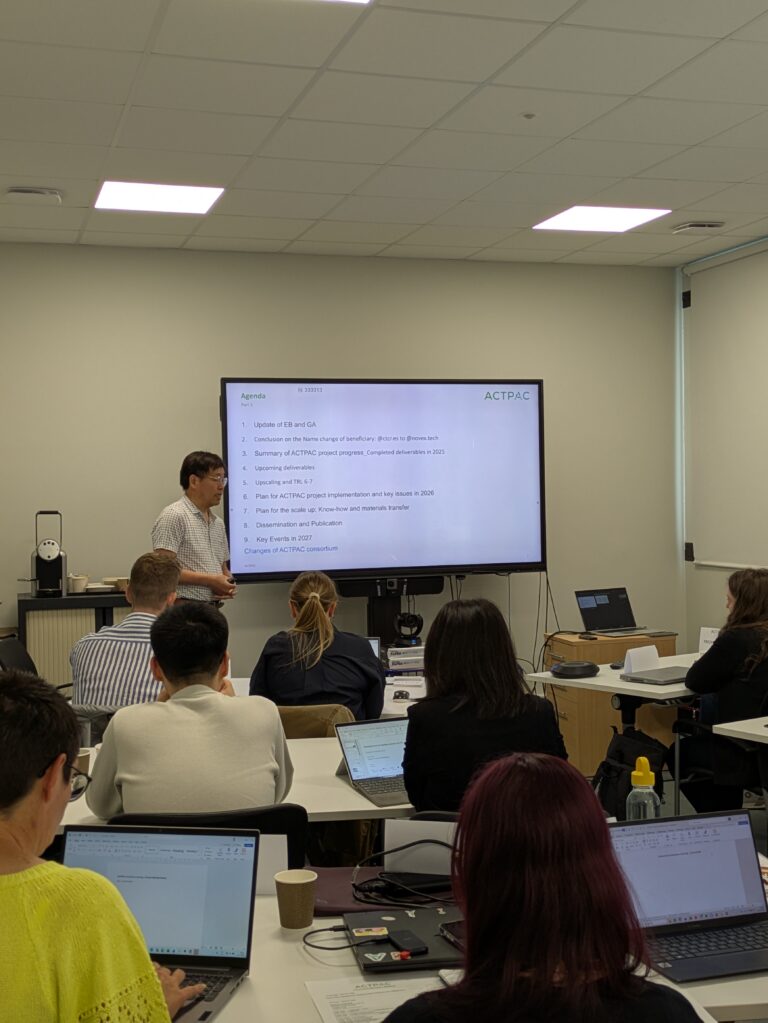
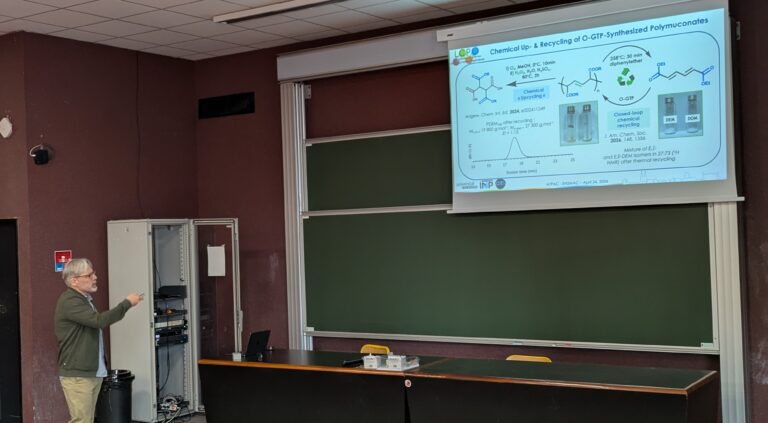
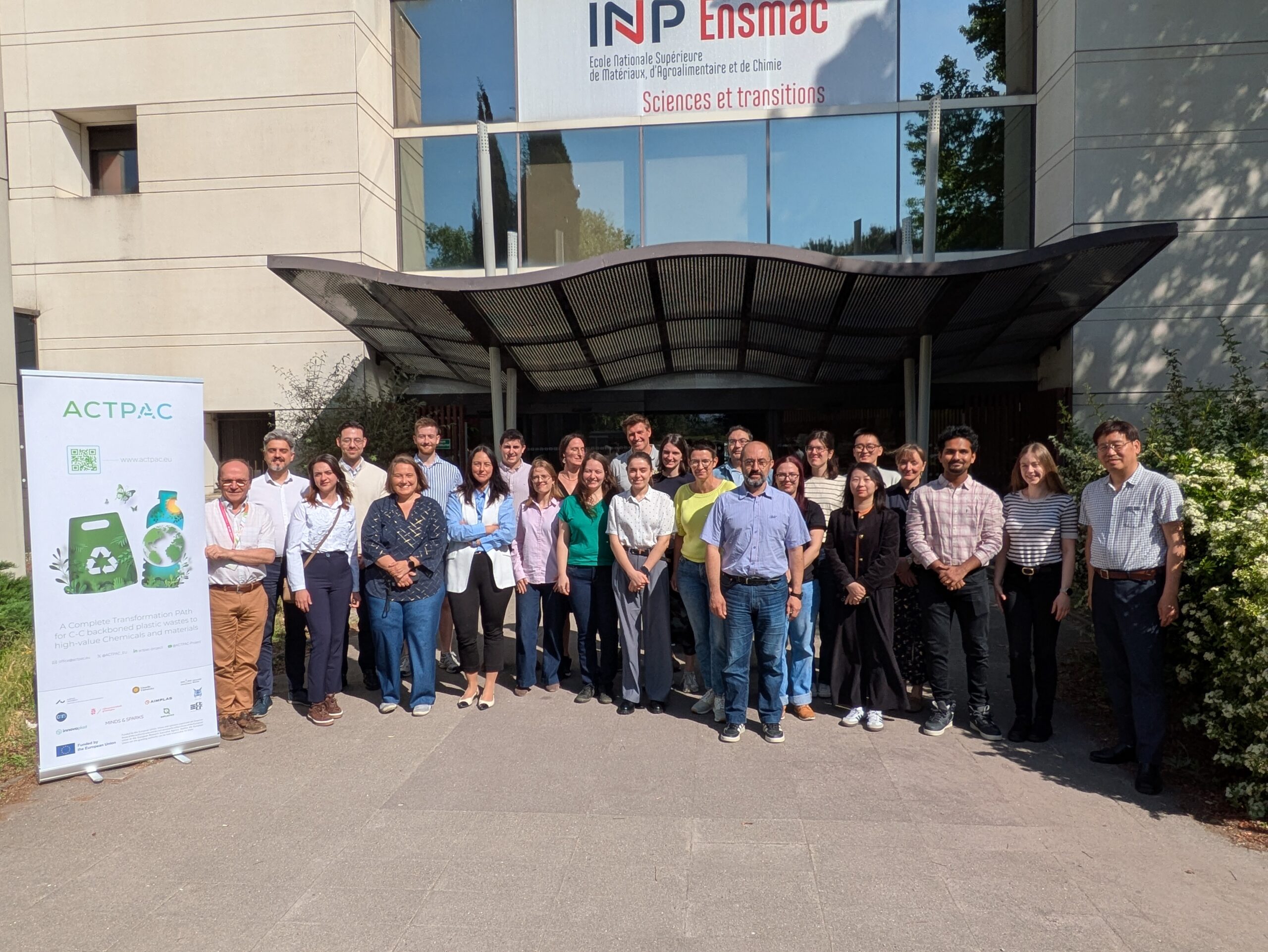
The Third ACTPAC Consortium Meeting and the Symposium on “New Trends in Polymer Science” took place in Bordeaux on 24–25 April 2026, bringing together project partners and researchers to discuss recent progress and future developments within ACTPAC.

During the two-day event, the first day was dedicated to ACTPAC project management activities, while the second focused on the symposium on “New Trends in Polymer Science.” This marked the first occasion where all 11 project partners, including five academic beneficiaries and six industrial partners, met in person to present their progress and discuss future developments. As ACTPAC enters its critical third year, the project is moving into a key transition phase where laboratory research is evolving into tangible technological outputs. These include new catalysts, upcycled polyethylene waste products, novel enzyme variants, and innovative process designs. Following the presentations, the consortium members formed technology-focused clusters in which academic and industrial partners collaborated on the transfer of know-how and materials while addressing challenges related to process upscaling and Technology Readiness Level (TRL) advancement.

Alongside the scientific discussions, participants also had the opportunity to experience the cultural atmosphere and renowned wine heritage of Bordeaux.

Figure 1 ACTPAC Project consortium meeting --- updating project progress and planning the transition from Lab to Pilot.
Figure 2 Prof. Daniel Taton (University of Bordeaus) making lecture on “From Macromolecular construction to polymer modification and deconstruction: Catalytic pathways to circularity”.

The symposium featured six renowned polymer scientists from France and the Netherlands, who delivered presentations on topics ranging from the challenges posed by micro- and nanoplastics to bioplastic alternatives, polymer construction and phase behaviour, and AI-driven macromolecular synthesis. The speakers provided valuable insights into current developments and future challenges within polymer science and the plastics industry.
The event also encouraged active dialogue between speakers and participants, supporting knowledge exchange and dissemination among early-career researchers and students. Such engagement plays an important role in attracting the next generation of scientists needed to develop sustainable and environmentally responsible solutions for the future.

Author: Zheng Guo

Keywords

ACTPAC, polymer science, consortium meeting, Bordeaux, plastic waste upcycling, polyethylene waste, sustainable materials, circular economy, industrial biotechnology, hydrocracking, enzymatic polymerization, Technology Readiness Level, pilot scale, Horizon Europe, scientific collaboration, polymer research, sustainable innovation, bio-based materials